Will Working Out Look Different in the Next 5 Years? How Wearable Technology Is Changing Fitness
Introduction
The fitness industry has evolved significantly over the decades. From the military-style jogging trends of the 1970s, the bodybuilding era of the 1980s, aerobic step classes in the 1990s, and the rise of high-intensity training and CrossFit in the 2000s, the way we approach exercise is constantly changing.
After COVID-19, just like many aspects of our lives, our relationship with fitness shifted. More than ever, people are prioritizing health, wellness, longevity, and disease prevention.
One of the biggest changes we are seeing is a move away from a “one-size-fits-all” approach to exercise. Instead, people are looking for training methods that are personalized to their goals, age, experience level, and individual biology.
This shift has been accelerated by technology. Smart watches, running apps, cycling trackers, training platforms, and nutrition apps have allowed people to collect more information about their bodies than ever before.
Technology is shaping the way we train, but the question becomes: how can we use this information to create smarter, more personalized fitness experiences?
The future of gyms may not just be about having better equipment or more intense workouts. It may be about understanding our bodies and brains well enough to know what type of training, recovery, and support we need at any given moment.
More efficient workouts
No matter your stage of life - whether you are a student, building a career, raising a family, or entering retirement - time is one of our most valuable resources.
Because our schedules are increasingly busy, the moments we dedicate to exercise need to be intentional. Whether you train at home, at a gym, or with a personal trainer, technology can help us better understand our bodies and make the most out of every workout.
Here are three ways technology is already changing the way we train:
1. Monitoring heart rate
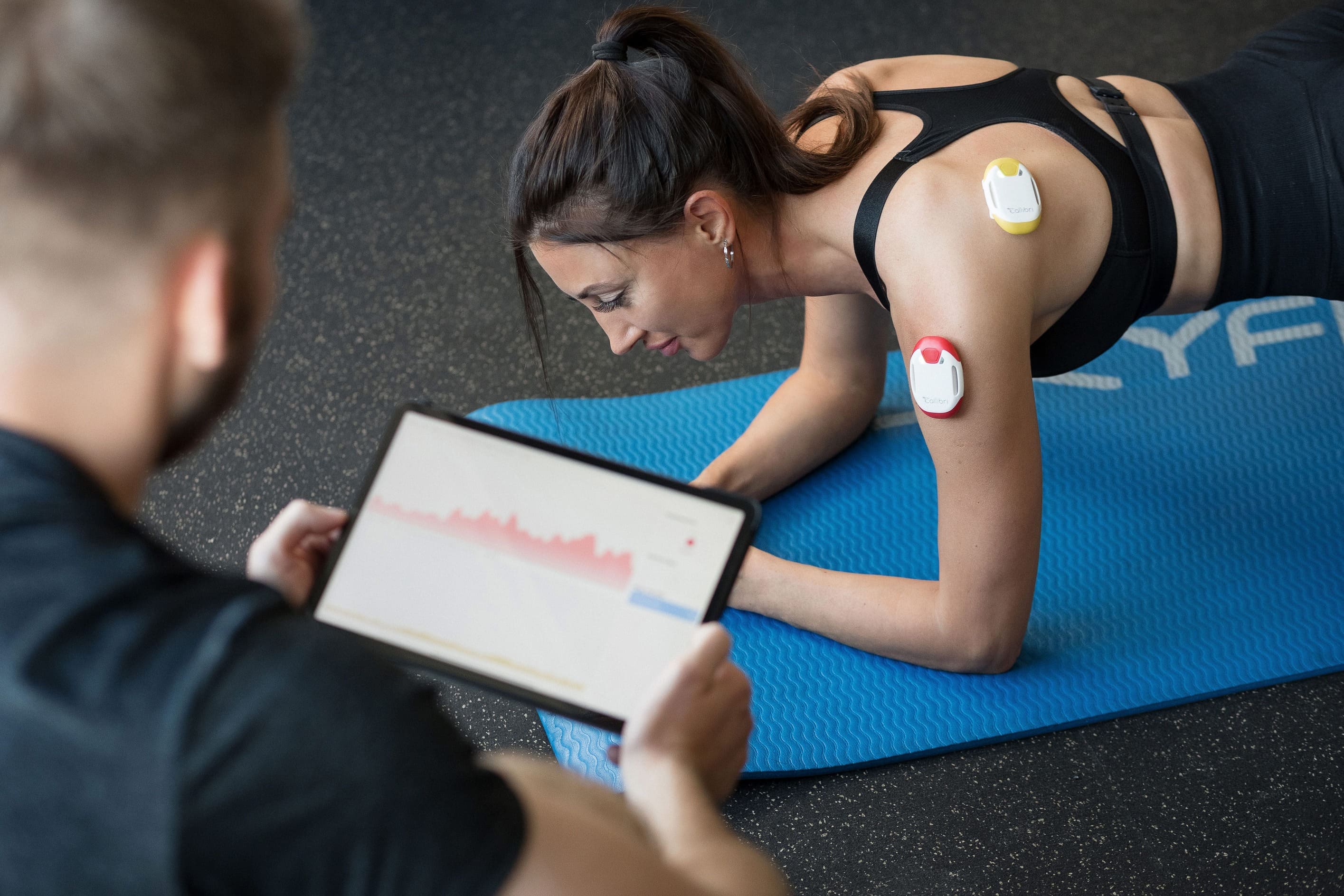
Heart rate zones measure how hard your heart is working during physical activity. Different zones can support different training goals, ranging from lower-intensity endurance training to higher-intensity speed and power work.
For example, Zone 2 training is commonly associated with improving endurance and metabolic health, while Zone 4 training is often used for improving speed and performance [1].
Heart rate can be measured through technologies such as photoplethysmography (PPG), commonly found in smart watches, and electrocardiography (ECG), often found in chest straps and specialized sensors. PPG uses light sensors to detect changes in blood flow [2], while ECG measures electrical activity generated by the heart [3].
By understanding how your heart responds during exercise, training can become more personalized and efficient.
2. Monitoring breathing rate
Breathing is closely connected to both heart function and energy production. During exercise, oxygen availability plays an important role in how efficiently the body can use energy stores.
Although the use of breathing data in fitness is still an emerging field [4], research suggests that breathing patterns can provide valuable information about physiological states, with some studies demonstrating benefits of slower breathing patterns in certain populations [5].
Breathing belt sensors and breathing-focused training can help increase awareness of breathing patterns and teach individuals how to regulate their breath during exercise.
3. Monitoring muscle engagement
As we look toward longevity, maintaining muscle mass and bone density has become a major focus in health and fitness. This may be one reason why strength training, particularly among women, has become increasingly popular [6].
A key concept in strength training is the “mind-muscle connection” - the ability to intentionally engage and feel the target muscle during an exercise. This requires a level of body awareness, known as proprioception [7], which can be challenging for beginners.
Technology such as electromyography (EMG) can provide insight into muscle activation by measuring electrical activity produced by muscles during contraction. This can help determine whether the intended muscles are being appropriately activated during movement.


By tracking even one of these metrics, individuals can gain a better understanding of their training and make adjustments that help them use their time more effectively.
However, fitness is not only about training harder. The next evolution of fitness technology is also focused on something equally important: recovery.

Optimizing recovery
In recent years, especially with the growing interest in longevity and sustainable health, there has been a shift toward understanding that progress does not come from constantly pushing harder.
Instead, recovery has become a central part of fitness.
This has contributed to the growth of practices such as sauna use, cold exposure, mobility training, stretching, restorative yoga, specialized recovery services, and increased interest in tracking sleep and stress through wearable technology.
Even among elite athletes, research has shown that training at maximum intensity all the time can be counterproductive. Strategic recovery periods allow the body to adapt, rebuild, and come back stronger [8].
Technology is now allowing us to better understand when our bodies are ready to push harder and when they may need additional recovery.
Some of the key recovery metrics being explored include:
1. Heart rate variability monitoring
Heart rate variability (HRV) measures changes in the timing between heartbeats and provides insight into autonomic nervous system function.
The autonomic nervous system regulates many automatic processes in the body, including breathing, heart rate, digestion, and the stress response.
During a sympathetic (“fight-or-flight”) state, the body prepares for action by increasing heart rate and mobilizing energy. During a parasympathetic (“rest-and-digest”) state, the body shifts toward restoration, with slower heart rate and increased recovery processes.
Lower HRV is often associated with increased physiological stress and reduced recovery capacity [9].
By tracking HRV, individuals can gain insight into how their body is responding to training, stress, sleep, and daily demands.
2. Galvanic skin response (GSR)
Galvanic skin response (GSR), also known as electrodermal activity, measures changes in skin conductivity related to activity of the autonomic nervous system.
When the sympathetic nervous system is activated, sweat glands increase activity, changing the electrical properties of the skin [10].
Like HRV, GSR can be combined with biofeedback approaches to help individuals become more aware of their physiological stress responses and practice regulating their nervous system [11].
3. Sleep tracking
Sleep is one of the most important components of recovery, influencing athletic performance, muscle growth, cognitive function, and overall health [12].
Modern sleep trackers combine movement detection and physiological measurements to estimate sleep patterns and stages.
One commonly used method is actigraphy, which uses accelerometers to measure movement and distinguish periods of wakefulness and sleep [13,14]. Some devices also incorporate additional physiological measurements, such as changes in blood flow, breathing rate, and skin temperature, to improve sleep estimates [15].
While wearable sleep trackers are not a replacement for clinical sleep assessments, they provide valuable insight into sleep patterns and recovery habits.
Recovery is influenced by many different factors, but sleep and stress regulation are two major pillars that determine how effectively the body can adapt to training.
As fitness technology continues to evolve, the question is becoming not only “How hard should I train?” but also “How prepared is my body and nervous system for this training today?”
And this leads us to the next frontier of fitness: the brain.
Bringing the brain on board
When we think about fitness, we often focus on the physical systems involved: muscles, bones, cardiovascular health, body composition, and nutrition.
However, every movement, decision, and adaptation begins with the brain.
The brain regulates motivation, attention, coordination, stress responses, recovery, and the ability to perform under pressure.
With advances in accessible EEG technology, we are beginning to better understand brain activity during different states including exercise, relaxation, focus, and sleep.
This creates an exciting opportunity: instead of only training the body, we may also be able to train the brain that controls it.

1. Attention and improved performance
From elite athletes to everyday fitness enthusiasts, researchers have explored EEG-guided neurofeedback as a tool to improve performance in sports including tennis, golf, basketball, hockey, rowing, and running [16].
Neurofeedback is a training technique where individuals receive real-time information about their brain activity through visual or auditory feedback. Over time, this feedback can help the brain learn to regulate its own activity.
The specific brainwave patterns associated with optimal performance appear to vary depending on the sport and level of expertise. However, research suggests that athletic performance is not only dependent on physical ability, it also relies on the brain’s ability to regulate attention, focus, and mental states [17,18].
2. Stress management
Stress has a significant impact on both physical and mental performance.
When we experience high levels of stress, brain activity can shift toward states associated with increased vigilance and difficulty transitioning into relaxation and recovery [19].
Neurofeedback has been explored as a tool to support individuals experiencing anxiety-related symptoms by helping regulate brain activity patterns associated with hyperarousal and promoting brain states linked to relaxation [20,21].
Because the brain and body are constantly communicating, changes in brain regulation can influence physiological states involved in recovery, performance, and overall well-being.
3. Optimizing sleep
While many wearable sleep trackers estimate sleep using movement and physiological signals, each stage of sleep is associated with distinct patterns of brain activity [12].
EEG provides a more direct measurement of these brainwave patterns and may offer deeper insight into sleep quality.
Neurofeedback has been investigated as a potential tool to support sleep quality, particularly in certain sleep-related conditions such as insomnia [25].
Rather than simply tracking sleep, future technologies may help individuals train the brain patterns associated with deeper, more restorative sleep.
Neurofeedback works by leveraging the brain’s natural ability to adapt and change through neuroplasticity. By providing real-time feedback, it may help strengthen healthier patterns of brain activity over time.
When we think about the future of gyms and fitness training, this may be one of the most exciting areas of growth: moving beyond simply measuring the body and beginning to understand and train the nervous system that controls it.
Conclusion
The gyms of the future may look very different from the gyms of today.
While most fitness facilities and personal trainers are not yet incorporating all of these technologies, wearable devices and physiological monitoring tools are becoming increasingly accessible.
The opportunity is not necessarily to optimize every single aspect of life or become overwhelmed by data.
Instead, technology gives us the ability to better understand ourselves.
It allows us to ask:
- What type of training is best for my body today?
- Am I recovering in a way that supports progress?
- Is my brain in the right state to support my goals?
The future of fitness is not about chasing perfection. It is about personalization - understanding your body, your brain, and your individual needs based on your goals, your environment, and your current stage of life.
Because when we learn to listen to both our brain and our body, we can create a more sustainable and effective approach to health and performance.
About the Author
Sylvie Lahaie is a McGill-trained PhD in neuroscience and a neurofeedback practitioner based in Montreal. She specializes in remote neurofeedback, meditation, and brain self-regulation, bridging neuroscience research with practical tools for everyday mental well-being.
www.synapticsylvie.com
References
1 - Neufeld, E. V., Wadowski, J., Boland, D. M., Dolezal, B. A., & Cooper, C. B. (2019). Heart Rate Acquisition and Threshold-Based Training Increases oxygen uptake at metabolic threshold in triathletes: a pilot study. International Journal of Exercise Science, 12(2), 144–154. https://doi.org/10.70252/hnhz4958
2 - Park, J., Seok, H. S., Kim, S., & Shin, H. (2022). Photoplethysmogram Analysis and Applications: An Integrative Review. Frontiers in Physiology, 12, 808451. https://doi.org/10.3389/fphys.2021.808451
3 - Serhani, M. A., Kassabi, H. T. E., Ismail, H., & Navaz, A. N. (2020). ECG Monitoring Systems: review, architecture, processes, and key challenges. Sensors, 20(6), 1796. https://doi.org/10.3390/s20061796
4 - Migliaccio, G. M., Russo, L., Maric, M., & Padulo, J. (2023). Sports Performance and breathing rate: What is the connection? A Narrative review on breathing strategies. Sports, 11(5), 103. https://doi.org/10.3390/sports11050103
5 - Liang, W., Ji, Y., Xiao, J., Truskauskaitė, I., Hendrixson, A., Bai, Z., & Ruksenas, O. (2024). Respiratory patterns and physical fitness in healthy adults: a cross-sectional study. BMC Public Health, 24(1), 228. https://doi.org/10.1186/s12889-024-17687-8
6 - Javed, A. A., Mayhew, A. J., Shea, A. K., & Raina, P. (2019). Association between hormone therapy and muscle mass in postmenopausal women. JAMA Network Open, 2(8), e1910154. https://doi.org/10.1001/jamanetworkopen.2019.10154
7 - Valdes, K., Manalang, K. C., & Leach, C. (2023). Proprioception: An evidence-based review. Journal of Hand Therapy, 37(2), 269–272. https://doi.org/10.1016/j.jht.2023.09.015
8 - Kaczmarek, F., Bartkowiak-Wieczorek, J., Matecka, M., Jenczylik, K., Brzezińska, K., Gajniak, P., Marchwiak, S., Kaczmarek, K., Nowak, M., Kmiecik, M., Stężycka, J., Krupa, K. K., & Mądry, E. (2025). Sleep and Athletic Performance: A multidimensional review of physiological and molecular mechanisms. Journal of Clinical Medicine, 14(21), 7606. https://doi.org/10.3390/jcm14217606
9 - Kim, H., Cheon, E., Bai, D., Lee, Y. H., & Koo, B. (2018). Stress and Heart Rate Variability: A Meta-Analysis and Review of the Literature. Psychiatry Investigation, 15(3), 235–245. https://doi.org/10.30773/pi.2017.08.17
10 - Can, Y. S., Arnrich, B., & Ersoy, C. (2019). Stress detection in daily life scenarios using smart phones and wearable sensors: A survey. Journal of Biomedical Informatics, 92, 103139. https://doi.org/10.1016/j.jbi.2019.103139
11 - Gevirtz, R. N. (2022). From GSR to Heart Rate Variability: A Long and Winding (Actually, Wiggly) Road. Applied Psychophysiology and Biofeedback, 47(4), 299–303. https://doi.org/10.1007/s10484-022-09540-8
12 - Dolezal BA, Neufeld EV, Boland DM, Martin JL, Cooper CB. (2017). Interrelationship between Sleep and Exercise: A Systematic Review. Adv Prev Med. 1364387. doi: 10.1155/2017/1364387.
13 - Shepard, A. J., Matrosic, C. K., Radtke, J. L., Jupitz, S. A., Culberson, W. S., & Bednarz, B. P. (2018). Technical Note: Characterization of clinical linear accelerator triggering latency for motion management system development. Medical Physics, 45(11), 4816–4821. https://doi.org/10.1002/mp.13191
14 - Smith, M. T., McCrae, C. S., Cheung, J., Martin, J. L., Harrod, C. G., Heald, J. L., & Carden, K. A. (2018). Use of Actigraphy for the evaluation of sleep Disorders and Circadian Rhythm Sleep-Wake Disorders: An American Academy of Sleep Medicine Systematic Review, Meta-Analysis, and GRADE Assessment. Journal of Clinical Sleep Medicine, 14(7), 1209–1230. https://doi.org/10.5664/jcsm.7228
15 - Vitazkova, D., Kosnacova, H., Turonova, D., Foltan, E., Jagelka, M., Berki, M., Micjan, M., Kokavec, O., Gerhat, F., & Vavrinsky, E. (2025). Transforming Sleep Monitoring: Review of wearable and remote devices advancing home polysomnography and their role in predicting neurological disorders. Biosensors, 15(2), 117. https://doi.org/10.3390/bios15020117
16 - Yu, C., Cheng, M., An, X., Chueh, T., Wu, J., Wang, K., & Hung, T. (2025). The Effect of EEG Neurofeedback Training on Sport Performance: A Systematic Review and Meta‐Analysis. Scandinavian Journal of Medicine and Science in Sports, 35(5), e70055. https://doi.org/10.1111/sms.70055
17 - Zacarias, R. M. G., Bulathwatta, D. T., Bidzan-Bluma, I., De Jesus, S. N., & Correia, J. M. (2025). EEG-Based Neurofeedback in Athletes and Non-Athletes: A Scoping Review of Outcomes and Methodologies. Bioengineering, 12(11), 1202. https://doi.org/10.3390/bioengineering12111202
18 - Cheng, M., Yu, C., An, X., Wang, L., Tsai, C., Qi, F., & Wang, K. (2024). Evaluating EEG neurofeedback in sport psychology: a systematic review of RCT studies for insights into mechanisms and performance improvement. Frontiers in Psychology, 15, 1331997. https://doi.org/10.3389/fpsyg.2024.1331997
19 - Huang, T. L., & Charyton, C. (2009). A comprehensive review of the psychological effects of brainwave entrainment. PubMed, 14(5), 38–50. https://pubmed.ncbi.nlm.nih.gov/18780583
20 - Chen, T., & Lin, I. (2020). The learning effects and curves during high beta down-training neurofeedback for patients with major depressive disorder. Journal of Affective Disorders, 266, 235–242. https://doi.org/10.1016/j.jad.2020.01.175
21 - Dadashi, M., Birashk, B., Taremian, F., Asgarnejad, A. A., & Momtazi, S. (2015). Effects of Increase in Amplitude of Occipital Alpha & Theta Brain Waves on Global Functioning Level of Patients with GAD. PubMed, 6(1), 14–20. https://pubmed.ncbi.nlm.nih.gov/27504152
22 - Lambert-Beaudet, F., Journault, W., Provençal, A. R., & Bastien, C. H. (2021). Neurofeedback for insomnia: Current state of research. World Journal of Psychiatry, 11(10), 897–914. https://doi.org/10.5498/wjp.v11.i10.897