Patented Wearable EEG System with Dry Electrode Architecture
BrainBit headband is based on a patented electrophysiological recording system designed for stable EEG acquisition in wearable, real-world conditions.
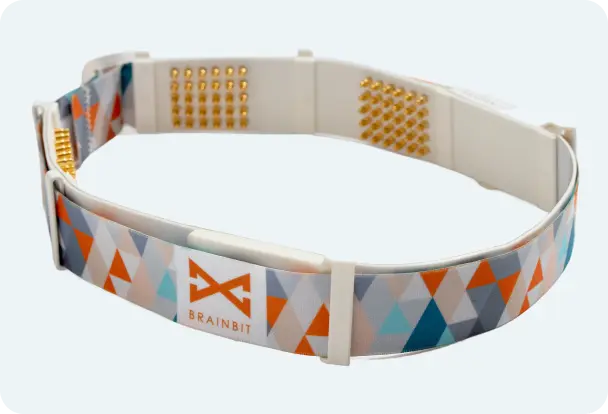
Unlike traditional EEG systems that rely on conductive gels, the BrainBit Headband design utilizes a distributed array of dry contact electrodes integrated into a flexible headband structure, enabling direct measurement of brain bioelectrical activity without preparation.
The system is protected by a U.S. patent covering both the mechanical design of the wearable structure and the configuration of electrode contacts and signal acquisition pathways.
Electrode System and Contact Design
At the core of the technology is a multi-point dry electrode interface, engineered to maintain stable electrical contact with the scalp.
This architecture allows the system to compensate for variations in skin contact and movement, ensuring consistent signal acquisition.
-
Electrodes are arranged in groups along a flexible ribbon-like structure
-
Each electrode includes multiple contact elements to improve signal stability
-
Contact surfaces are designed to operate without conductive media (gel-free)
-
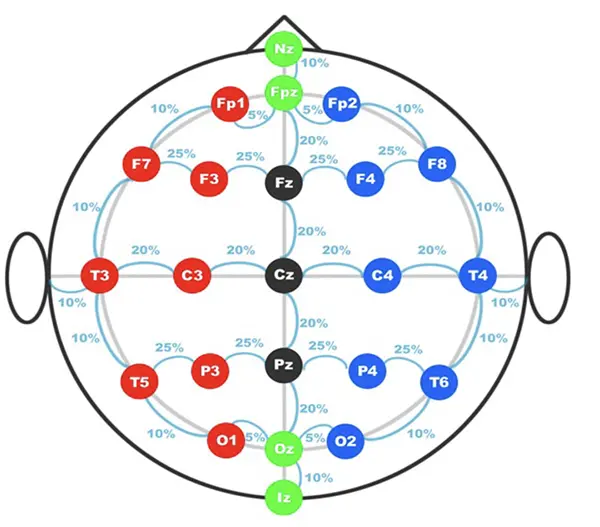
Electrode segments are distributed to align with standard EEG measurement zones
-
Flexible Wearable Structure
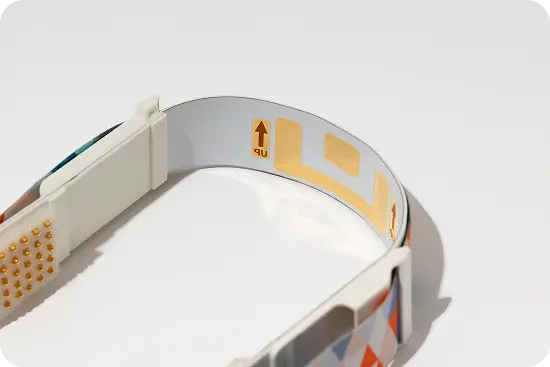
The headband incorporates a segmented, flexible frame that adapts to the user’s head shape while maintaining electrode positioning.
Key structural elements described in the patent include:-

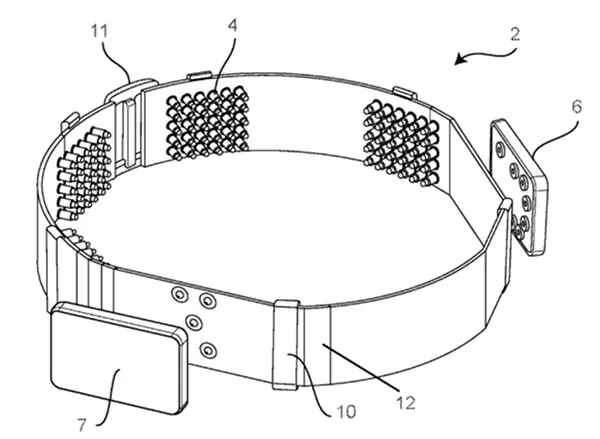
a flexible band with embedded electrode modules
-
adjustable segments that maintain pressure and positioning
-
integration of electronics within the wearable structure
-
modular placement of electrode groups across the band
This design enables repeatable electrode placement without complex setup procedures.
-
-
Signal Acquisition and Processing Pathway
The system is designed to capture and transmit electrophysiological signals efficiently.
Core functional principles include:-

acquisition of low-amplitude bioelectrical signals from the scalp
-
transmission through conductive pathways embedded in the headband
-
connection to integrated electronics for signal amplification and processing
-
wireless data transmission to external computing devices
The architecture supports real-time signal processing and integration into software applications.
-
-
Stability Without
Conductive GelA key innovation of the system is the ability to maintain signal quality without gel-based electrodes.
This is achieved through:-
multi-contact electrode geometry
-
distributed contact points reducing impedance variability
-
mechanical design ensuring stable pressure and positioning
-
segmentation of electrode arrays to maintain consistent contact
This approach enables EEG acquisition in non-laboratory environments while preserving signal reliability.
-
-
Designed for Scalable EEG Applications
The patented architecture enables EEG technology to be applied beyond traditional clinical settings.
Applications include:-
brain-computer interface (BCI) systems
-
cognitive and behavioral research
-
human-computer interaction studies
-
adaptive software and interactive systems
-
wearable neurotechnology platforms
By combining wearable design, dry electrodes, and integrated electronics, BrainBit provides a foundation for scalable EEG-based systems.

-
-
Bridging Research and
Real-World UseThe BrainBit patented system represents a transition from laboratory EEG systems to practical, deployable neurotechnology.
It maintains:
• core electrophysiological measurement principles
• structured electrode placement
• signal integrity requirementswhile introducing:
• wearable usability
• simplified setup
• integration into modern software ecosystems
-
Based on Established EEG Principles
BrainBit technology builds on established methods of electroencephalography (EEG), including:
-
measurement of cortical electrical activity
-
analysis of frequency bands (alpha, beta, theta, delta)
-
multi-channel signal acquisition
-
time-domain and frequency-domain processing
-
Multi-Point Dry Electrode Architecture
The BrainBit headband uses a distributed multi-contact electrode architecture designed to ensure stable signal acquisition across different users and conditions.
Key Design Principles:
-

Segmented Electrode Zones
Electrodes are grouped into zones along the headband, positioned to capture signals from multiple regions of the scalp.
-

Multi-Contact Electrode Elements
Each electrode includes multiple contact points, increasing the probability of stable electrical connection without conductive gel.
-

Flexible Ribbon Structure
Electrode groups are embedded into a flexible band that adapts to head shape while maintaining consistent positioning.
-

Reference and Signal Electrodes
The system includes both signal electrodes and reference electrodes arranged within the same structure, enabling differential signal acquisition.
Why This Matters
Traditional EEG systems rely on precise placement and conductive gel to ensure low impedance.
The BrainBit approach achieves comparable stability through:
-
Distributed contact geometry
-
Mechanical stabilization via wearable structure
-
Redundancy in electrode points
This enables reliable EEG recording in real-world, non-laboratory environments.
Built on Established EEG and Electrophysiology Principles
BrainBit technology is grounded in well-established methods of electroencephalography (EEG) and electrophysiological signal acquisition
Core Scientific Concepts:

-
Measurement of cortical electrical activity via scalp electrodes
-
Frequency band analysis (alpha, beta, theta, delta rhythms)
-
Multi-channel signal acquisition and referencing
-
Time-domain and frequency-domain signal processing
-
Noise reduction and artifact handling
Additional Technical Context
The design aligns with broader research and engineering approaches in:
• wearable EEG systems
• dry electrode signal acquisition
• human-computer interaction using biosignals
• portable neurotechnology platforms
BrainBit extends these principles into a scalable, product-ready system, bridging laboratory-grade methodologies with real-world usability.