Common EEG Artifacts Explained: How to Improve EEG Signal Quality in Neurofeedback, Research, and Wearable EEG Applications
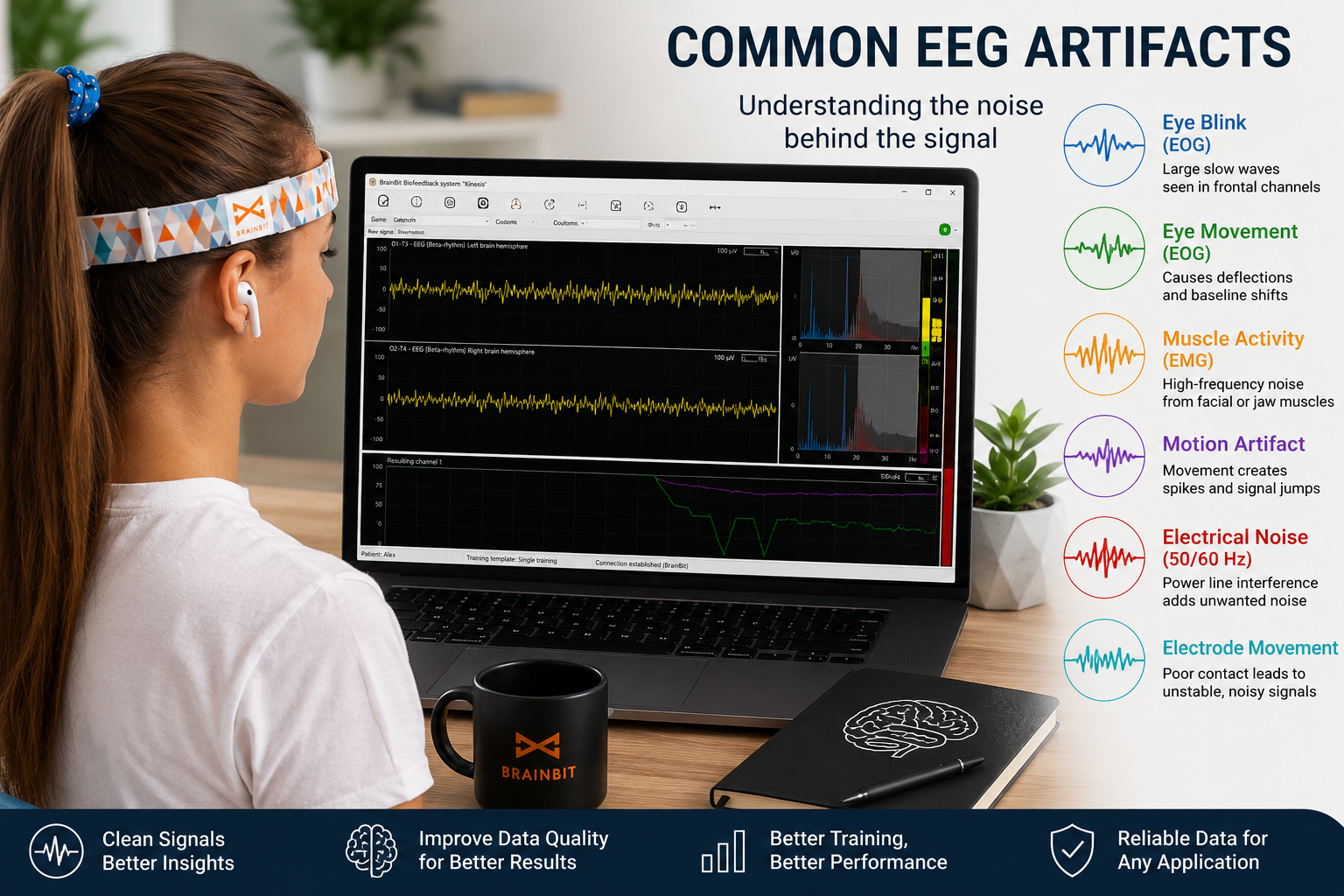
Electroencephalography (EEG) has become increasingly accessible thanks to modern wearable devices, wireless sensors, and real-time signal processing technologies. Today, EEG is used across a wide range of applications, including neurofeedback, cognitive performance training, meditation technologies, brain-computer interfaces (BCIs), neuroscience research, and custom neurotechnology development.
However, one challenge remains universal regardless of the device, software platform, or application: EEG artifacts.
Artifacts are unwanted signals that contaminate EEG recordings and make it more difficult to accurately interpret brain activity. Whether you're building a neurofeedback application, conducting research, developing a brain-computer interface, or analyzing brainwave data from a wearable EEG device, understanding EEG artifacts is essential for obtaining reliable results.
In this guide, we'll explain the most common EEG artifacts, how they affect recordings, and practical strategies for improving signal quality when working with wearable EEG systems.
What Are EEG Artifacts?
EEG artifacts are signals that appear in EEG recordings but do not originate from the brain itself.
These unwanted signals can be caused by:
- Eye movements
- Blinking
- Muscle activity
- Head movement
- Electrode displacement
- Environmental electrical interference
- Poor sensor contact
Artifacts can distort EEG measurements and make it difficult to identify genuine brainwave patterns such as alpha, beta, theta, and delta activity.
For anyone working with wearable EEG devices, understanding artifacts is one of the most important aspects of EEG signal quality management.
If you're new to EEG technology, start by exploring how wearable EEG devices work and how modern sensors capture brain activity.
Why EEG Signal Quality Matters
High-quality EEG data forms the foundation of:
- Neurofeedback systems
- Brain-computer interfaces
- Cognitive training applications
- Meditation technologies
- Performance coaching tools
- Neuroscience research
Poor signal quality can lead to:
- Misleading metrics
- Inaccurate training feedback
- Unstable application performance
- Reduced reliability of EEG analytics
Even the most advanced algorithms cannot compensate for severely contaminated data.
This is why modern EEG platforms place significant emphasis on signal monitoring, artifact detection, and quality control.
Understanding the Difference Between Brain Activity and Artifacts
One of the biggest challenges in EEG analysis is distinguishing true neural activity from external noise.
Brain activity typically appears as organized frequency patterns across specific EEG bands:


Artifacts often create abnormal spikes, irregular fluctuations, or exaggerated power increases that do not reflect actual brain activity.
Learning to recognize these patterns is an important skill for:
- EEG researchers
- Neurofeedback practitioners
- Software developers
- Data scientists
- Performance coaches
Eye Blink Artifacts
Eye blinks are among the most common EEG artifacts.
Every time a person blinks, electrical activity generated by eye movement can be detected by EEG sensors.
Why Eye Blink Artifacts Occur
The eyes generate strong electrical signals known as electrooculographic (EOG) activity.
Because the eyes are located near frontal EEG sensors, blinks often produce large amplitude fluctuations.
How Eye Blink Artifacts Appear
Common characteristics include:
- Large slow waves
- Strong frontal activity
- Sudden amplitude increases
- Repetitive patterns
How to Reduce Eye Blink Artifacts
Strategies include:
- Relaxed visual focus
- Reducing unnecessary blinking
- Recording during stable visual tasks
- Using artifact detection algorithms
Most modern EEG software platforms can automatically identify blink-related events.
Eye Movement Artifacts
Even when users are not blinking, eye movements can affect EEG recordings.
Looking left, right, up, or down changes electrical activity around the eyes.
Common Sources
- Reading text
- Watching moving objects
- Screen navigation
- Mobile device interaction
Impact on EEG Data
Eye movement artifacts primarily affect:
- Frontal channels
- Attention measurements
- Neurofeedback metrics
For applications involving screens or visual interfaces, eye movement monitoring becomes especially important.
Muscle Artifacts (EMG)
Muscle activity generates electrical signals that are often much stronger than brainwave activity.
These artifacts are known as electromyographic (EMG) artifacts.
Common Sources
- Jaw clenching
- Talking
- Smiling
- Chewing
- Neck tension
- Forehead tension
How EMG Appears in EEG
Muscle artifacts often create:
- High-frequency activity
- Broadband noise
- Sudden bursts of signal power
These artifacts frequently overlap with beta and gamma frequencies.
Why This Matters
Many neurofeedback and cognitive performance applications rely on beta activity measurements.
Muscle tension can sometimes be mistaken for increased beta activity if artifact management is poor.
Facial Muscle Artifacts
Facial expressions create another common source of contamination.
Activities such as:
- Raising eyebrows
- Frowning
- Smiling
- Squinting
can significantly affect EEG recordings.
Wearable EEG users often generate facial muscle artifacts without realizing it.
Training users to maintain a relaxed facial posture can dramatically improve signal quality.
Motion Artifacts
Motion artifacts occur when the EEG device shifts position relative to the head.
This is especially relevant for wearable EEG devices used outside traditional laboratory environments.
Common Causes
- Walking
- Running
- Head turning
- Physical exercise
- Sensor displacement
How Motion Artifacts Appear
Motion artifacts often produce:
- Sudden signal spikes
- Baseline shifts
- Irregular amplitude changes
Minimizing Motion Artifacts
Best practices include:
- Proper device fitting
- Stable sensor contact
- Comfortable headband placement
- Secure attachment mechanisms
Modern wearable EEG systems are specifically designed to minimize motion-related disturbances.
Electrode Contact Artifacts
EEG signal quality depends heavily on stable electrode contact.
When sensor contact changes, recordings can become unstable.
Causes
- Loose headbands
- Hair interference
- Sensor movement
- Poor positioning
Symptoms
- Sudden signal loss
- Flat channels
- Excessive noise
- Intermittent recordings
Regular signal quality checks help identify these issues before they impact data analysis.
Electrical Interference
Electrical noise remains one of the most recognized EEG artifacts.
Nearly every modern environment contains electronic devices that generate electromagnetic signals.
Common Sources
- Power supplies
- Computer monitors
- Mobile phones
- Chargers
- Fluorescent lighting
- Wireless electronics
- Power Line Noise
One of the most common forms of interference appears around:
- 50 Hz
- 60 Hz
depending on the region.
Reducing Electrical Noise
Recommended practices:
- Increase distance from power sources
- Minimize unnecessary electronics nearby
- Use shielded equipment when appropriate
- Monitor signal quality continuously
Wireless Environment Artifacts
As wearable EEG technology becomes more common, wireless environments introduce new considerations.
Bluetooth devices, Wi-Fi routers, and connected electronics can affect recording conditions.
Fortunately, modern EEG systems are designed to operate effectively in everyday environments while maintaining stable wireless communication.
Sweat Artifacts
Long recording sessions sometimes introduce changes caused by perspiration.
Sweat can alter electrical conductivity between the skin and sensors.
Potential Effects
- Slow signal drift
- Reduced contact quality
- Increased low-frequency noise
Maintaining comfortable environmental conditions can help minimize these effects.
Baseline Drift
Baseline drift refers to gradual shifts in the EEG signal over time.
Causes
- Sensor movement
- Sweat
- Contact changes
- Environmental factors
Characteristics
Baseline drift often appears as:
- Very slow fluctuations
- Signal offsets
- Long-duration trends
Signal processing techniques are commonly used to reduce these effects.
How EEG Artifacts Affect Neurofeedback
Neurofeedback systems depend on accurate measurements of brainwave activity.
Artifacts can:
- Distort training metrics
- Trigger incorrect feedback
- Reduce session consistency
- Affect performance outcomes
Modern neurofeedback platforms therefore rely on multiple layers of signal quality monitoring.
Learn more about neurofeedback applications powered by wearable EEG technology.
EEG Artifacts in Brain-Computer Interfaces
Brain-computer interfaces require real-time EEG analysis.
Because BCI systems often operate continuously, artifact management becomes especially important.
Common challenges include:
- User movement
- Facial activity
- Environmental noise
Effective artifact handling improves:
- Command accuracy
- Response consistency
- User experience
EEG Artifacts for Developers
Developers building EEG-powered applications should consider artifact management from the beginning of the design process.
Important considerations include:
Signal Quality Monitoring
Applications should continuously monitor:
- Contact quality
- Noise levels
- Signal stability
- Artifact Detection
Modern algorithms can automatically identify:
- Eye blinks
- Motion events
- Muscle activity
- User Guidance
Applications can provide real-time recommendations such as:
- Adjust headband position
- Reduce movement
- Improve posture
Developers interested in creating EEG-powered software can explore the BrainBit SDK and application development tools.
Best Practices for Recording Clean EEG Signals
Improving EEG quality often requires a combination of hardware, software, and user behavior.
Before Recording
- Ensure proper device placement
- Verify sensor contact
- Reduce environmental distractions
During Recording
- Minimize excessive movement
- Maintain relaxed facial muscles
- Avoid unnecessary talking
After Recording
- Review signal quality indicators
- Identify artifact-heavy segments
- Apply appropriate filtering methods
How Modern Wearable EEG Systems Handle Artifacts
Today's wearable EEG systems incorporate numerous technologies designed to improve recording quality.
These include:
- Stable sensor placement
- Real-time quality monitoring
- Advanced signal processing
- Wireless optimization
- Artifact detection workflows
As wearable EEG adoption grows, artifact management continues to become more sophisticated and automated.
Explore additional EEG applications and use cases across neurofeedback, performance coaching, meditation, education, and software development.
Frequently Asked Questions
What are EEG artifacts?
EEG artifacts are unwanted signals that appear in EEG recordings but do not originate from brain activity.
What causes EEG artifacts?
Common causes include eye blinks, muscle activity, movement, electrical interference, and poor sensor contact.
Are EEG artifacts normal?
Yes. Every EEG recording contains some level of artifact contamination.
Can wearable EEG devices detect artifacts?
Modern wearable EEG systems often include signal quality monitoring and artifact detection capabilities.
What is the most common EEG artifact?
Eye blink artifacts are generally considered the most common source of EEG contamination.
Why is artifact removal important?
Artifact management improves data quality, increases reliability, and helps ensure that EEG measurements reflect actual brain activity rather than external noise.
Can EEG artifacts affect neurofeedback?
Yes. Artifacts can distort brainwave measurements and influence neurofeedback metrics if not properly managed.
How can I improve EEG signal quality?
Proper device placement, stable sensor contact, minimizing movement, and using modern signal-processing tools can significantly improve EEG recordings.
Conclusion
Understanding EEG artifacts is essential for anyone working with neurofeedback, wearable EEG devices, brain-computer interfaces, cognitive training applications, or neuroscience research.
Artifacts are a natural part of EEG recording, but they do not have to compromise data quality. By recognizing common sources such as eye blinks, muscle activity, motion, electrical interference, and sensor contact issues, users can dramatically improve signal reliability and achieve more accurate insights from brainwave data.
As wearable EEG technology continues to evolve, intelligent artifact detection and signal quality monitoring will remain critical components of successful neurotechnology applications. Whether you're building software, conducting research, developing neurofeedback tools, or exploring brain-computer interfaces, mastering EEG artifacts is one of the most important steps toward obtaining clean, meaningful EEG data.