BrainBit is participating in SBMT 2026, the 23rd Annual Neurotech Convention, taking place April 16–19, 2026 at the Los Angeles Convention Center. Organized by the Society for Brain Mapping and Therapeutics, the event brings together physicians, scientists, policymakers, funding agencies, industry leaders, and technology innovators focused on brain mapping, neurotechnology, and image-guided therapies.
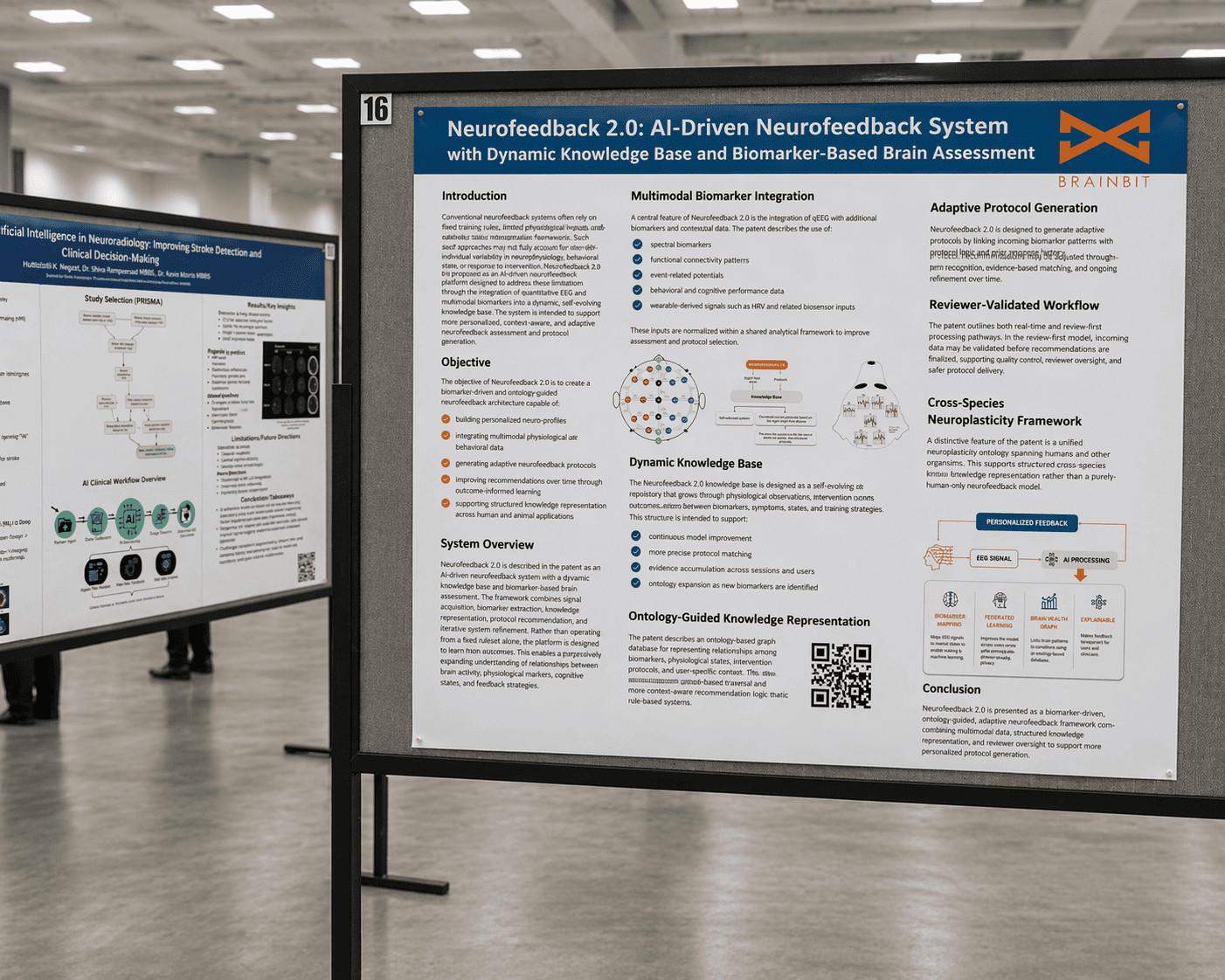
This year, we are proud to showcase BrainBit’s work through our poster presentation:
The conference only started yesterday, and we are excited to already be part of the conversations shaping the future of neurotechnology.
Why SBMT matters
SBMT’s annual convention is one of the notable global meeting points for neuroscience, neurotechnology, neurology, psychiatry, engineering, and translational medicine. The official program describes the event as a global gathering for innovators in brain mapping and highlights topics ranging from neurosurgery and neurology to psychiatry, psychology, and enabling technologies. The audience includes neuroscientists, neurosurgeons, neurologists, engineers, psychologists, students, and other specialists working across the neuroscience ecosystem.
For BrainBit, that makes SBMT an important place to share ideas, present applied neurotechnology, and connect with researchers, clinicians, and innovators working on the next generation of EEG-based solutions.
Our poster at SBMT 2026
At the conference, BrainBit is presenting a poster focused on the future of neurofeedback systems and how they can evolve beyond static, one-size-fits-all approaches.
The poster outlines a concept we call Neurofeedback 2.0 - an AI-driven neurofeedback framework designed around:
- dynamic knowledge bases
- biomarker-based brain assessment
- adaptive protocol generation
- reviewer-validated workflows
- multimodal input integration
The central idea is simple: neurofeedback systems can become more flexible, more data-aware, and more personalized when they incorporate not only EEG, but also broader biomarker and contextual information.
Rather than relying only on fixed training protocols, this approach points toward systems that can adapt based on incoming data, accumulated knowledge, and evolving user profiles.
A step toward more adaptive neurofeedback
Conventional neurofeedback systems often depend on predefined rules and relatively fixed training logic. That model has value, but it can also limit personalization.
The direction explored in our poster is different. It asks what neurofeedback could look like if systems were designed to:
- interpret more diverse biomarker inputs
- organize knowledge dynamically
- adapt recommendations over time
- support more individualized assessment and training
This reflects a broader shift in neurotechnology: from static tools toward adaptive, data-informed systems.
For BrainBit, this is closely aligned with the long-term opportunity in EEG and neurofeedback. Wearable hardware, real-time signal acquisition, software platforms, and intelligent analysis are no longer separate pieces. Increasingly, they form one connected ecosystem.
BrainBit’s perspective on neurotechnology
At BrainBit, we see EEG not only as a measurement tool, but as a foundation for building practical systems for research, neurofeedback, application development, education, and performance-related use cases.
Participating in SBMT reinforces that vision.
The official SBMT materials describe the congress as a place where advances in neurotechnology are connected to real-world applications and translational outcomes. That matters because the future of brain technologies will depend not just on theory, but on usable systems that researchers, developers, clinicians, and organizations can actually work with.
Our poster fits directly into that space. It is about how neurofeedback can evolve through better system design, more adaptive logic, and stronger knowledge integration.
Meeting the global neurotech community
One of the biggest values of conferences like SBMT is the opportunity to be part of a broader professional conversation.
This year’s convention brings together participants from a wide range of fields, including medicine, engineering, psychology, neuroscience, rehabilitation, and advanced technology development. That kind of interdisciplinary environment is especially important in neurotechnology, where progress often happens at the intersection of hardware, software, data science, and clinical insight.
For BrainBit, participating in SBMT means more than presenting a poster. It means engaging with the community that is actively defining where neurofeedback, brain mapping, and wearable neurotechnology are going next.
Looking ahead
SBMT 2026 is still underway, and we are glad to be part of it from the start.
We look forward to the discussions ahead and to sharing more from the event. As the conference continues, we are proud to represent BrainBit in a forum dedicated to the future of brain science, translational neurotechnology, and advanced therapeutic innovation.
If you are attending SBMT 2026 and see our poster, we’d be glad to connect.
Explore Neurofeedback 2.0