BrainBit Blog
BrainAssistant by Brainboost: Advanced Neurofeedback Powered by BrainBit EEG Technology
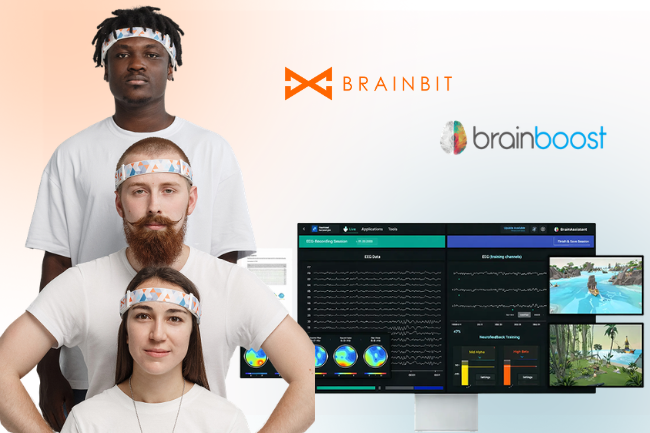
Neurofeedback technology has evolved rapidly in recent years as advances in wearable EEG devices and neurotechnology software have made brain training more accessible than ever. At the center of this progress is the integration of reliable EEG hardware with powerful neurofeedback platforms capable of analyzing brain activity in real time.
One such solution is BrainAssistant by Brainboost, a neurofeedback system built on BrainBit EEG technology and the BrainBit SDK ecosystem. By combining advanced wearable EEG devices with specialized neurofeedback software, BrainAssistant provides a flexible platform for brain training, research, and neurotechnology development.
This article explores how BrainAssistant works, how it integrates with BrainBit hardware, and why this collaboration represents an important step forward for neurofeedback systems.
What Is BrainAssistant?
BrainAssistant is a neurofeedback platform developed by Brainboost, designed to work seamlessly with BrainBit EEG devices. The system provides a complete neurofeedback environment where brain activity can be measured, visualized, and used to train cognitive states.
Using EEG signals collected from BrainBit devices, BrainAssistant analyzes brainwave patterns and delivers feedback through interactive exercises and visual tools. These feedback mechanisms allow users to learn how to regulate brain activity associated with focus, relaxation, or cognitive performance.
Unlike simple meditation applications, BrainAssistant is designed for advanced neurofeedback training and professional environments, including:
- neuroscience research
- neurofeedback practice
- cognitive performance training
- neurotechnology experimentation
How BrainBit Hardware Powers BrainAssistant
The reliability of any neurofeedback system depends heavily on the quality of the EEG hardware used to measure brain signals.
BrainAssistant uses BrainBit wearable EEG devices, which are designed to provide accurate brainwave monitoring while maintaining portability and comfort.
BrainBit EEG systems measure electrical signals generated by neuronal activity in the brain. These signals are captured through electrodes placed on the scalp and transmitted to software platforms such as BrainAssistant for analysis.
Several BrainBit devices are compatible with neurofeedback workflows.
BrainBit Headband
The BrainBit Headband is a wearable EEG device designed for portable brain monitoring and neurofeedback applications.
Key characteristics include:
- multi-channel EEG recording
- wireless connectivity
- dry electrode technology
- lightweight design
These features allow BrainAssistant users to perform neurofeedback sessions without complex laboratory setups.
BrainBit Headband Pro
The Headband Pro expands EEG recording capabilities with additional electrode coverage.
This device is suitable for:
- advanced neurofeedback training
- research experiments
- multi-region brain activity monitoring
When paired with BrainAssistant software, the Headband Pro allows more detailed brainwave analysis.
BrainBit Flex and Flex8
For research environments and advanced neurotechnology development, BrainBit Flex systems (Flex 4 channels and Flex 8 channels) provide flexible electrode placement and expanded channel configurations.
These systems are ideal for:
- neuroscience research
- brain-computer interface development
- cognitive performance experiments
Because BrainAssistant integrates with the BrainBit SDK, researchers can build customized neurofeedback workflows using Flex-series devices.
BrainAssistant Neurofeedback Features
BrainAssistant software provides tools that allow users to interact with their brainwave data and train cognitive states through neurofeedback.
Real-Time Brainwave Monitoring
The platform continuously receives EEG data from BrainBit devices and analyzes brainwave activity in real time.
Users can observe patterns in major EEG frequency bands:
- alpha waves
- beta waves
- theta waves
- delta waves
This information forms the basis for neurofeedback training protocols.
Interactive Neurofeedback Exercises
BrainAssistant includes interactive training environments designed to help users regulate brain activity.
These exercises may involve:
- visual feedback environments
- cognitive tasks
- focus training activities
When the user’s brainwave activity reaches the desired pattern, the software provides positive feedback, reinforcing the targeted brain state.
Data Visualization and Analytics
Another advantage of the BrainAssistant platform is its ability to visualize EEG signals and neurofeedback progress.
Researchers and practitioners can analyze:
- brainwave trends
- session performance
- training progress over time
This capability makes BrainAssistant useful for both neurofeedback practitioners and scientific studies.
BrainBit SDK: Enabling Advanced Neurotechnology
A key component of the BrainAssistant ecosystem is the BrainBit SDK, which allows developers and researchers to access EEG data streams directly from BrainBit devices.
The SDK supports multiple development environments, enabling integration with:
- Windows applications
- mobile platforms
- Unity environments
- Python-based research pipelines
This flexibility allows neurotechnology developers to create custom applications that extend the capabilities of the BrainAssistant platform.
Applications of BrainAssistant Neurofeedback
The integration of BrainAssistant software with BrainBit EEG hardware opens possibilities across several domains.
Cognitive Performance Training
Neurofeedback can be used to train mental states related to attention and focus.
BrainAssistant training programs may help users learn how to regulate brain activity associated with concentration and cognitive control.
Neuroscience Research
Researchers studying brain activity can use BrainAssistant together with BrainBit hardware to analyze EEG signals in real time.
The portability of BrainBit devices makes it possible to conduct experiments outside traditional laboratory environments.
Brain-Computer Interface Development
Because BrainAssistant integrates with the BrainBit SDK, the platform can be used in BCI research and development projects.
BCI systems use EEG signals to control software applications or external devices, creating new forms of interaction between humans and computers.
Education and Neurotechnology Training
Universities and research labs increasingly incorporate EEG technology into neuroscience education.
BrainAssistant and BrainBit devices provide an accessible platform for students learning about brain signals, neurofeedback, and applied neuroscience.
Advantages of the BrainAssistant and BrainBit Ecosystem
The combination of BrainAssistant software and BrainBit hardware offers several advantages compared to traditional neurofeedback setups.
Integrated Hardware and Software
Many neurofeedback systems require complicated integration between EEG hardware and training software.
BrainAssistant is designed to work directly with BrainBit devices, simplifying the setup process.
Wearable EEG Technology
BrainBit devices are designed for wearable EEG monitoring, allowing neurofeedback training outside traditional laboratory environments.
Developer-Friendly Architecture
Through the BrainBit SDK, developers can extend the platform with custom neurotechnology applications.
Research-Ready EEG Data
BrainBit hardware provides reliable EEG signals suitable for research, enabling BrainAssistant to be used in scientific studies.
The Future of Neurofeedback Technology
The integration of EEG hardware with advanced neurofeedback software platforms represents an important step in the evolution of neurotechnology.
Solutions like BrainAssistant demonstrate how modern neurofeedback systems can combine:
- wearable EEG hardware
- real-time brain signal analysis
- interactive training environments
As neurotechnology continues to develop, integrated ecosystems such as BrainAssistant and BrainBit are likely to play a central role in advancing neurofeedback research and applications.
Conclusion
BrainAssistant by Brainboost represents a powerful neurofeedback platform built on BrainBit EEG technology and SDK capabilities. By combining wearable EEG devices with advanced neurofeedback software, the system enables researchers, practitioners, and developers to explore new possibilities in brain training and cognitive performance.
Whether used in neuroscience research, neurofeedback practice, or neurotechnology development, the integration of BrainAssistant with BrainBit hardware demonstrates how modern EEG systems can deliver flexible and accessible neurofeedback solutions.