BrainBit Blog
Alpha, Beta, Theta Waves in Neurofeedback: Complete Guide to Brainwave Training
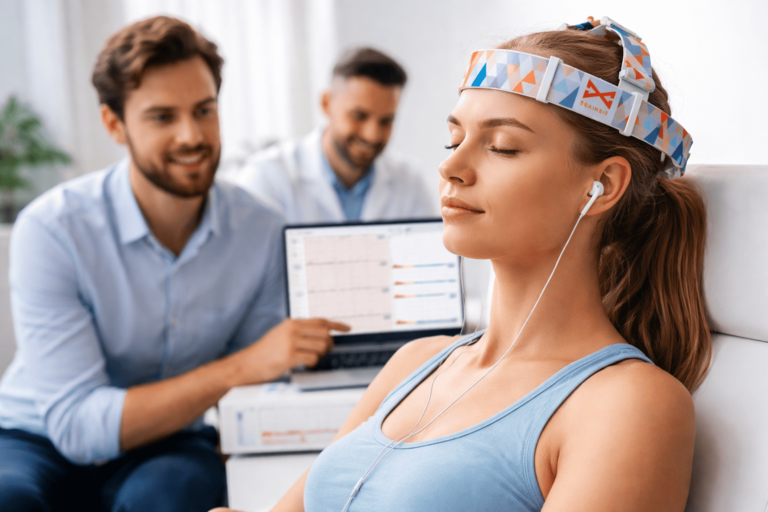
Understanding how the brain works is one of the most fascinating areas of neuroscience and neurofeedback makes it possible to observe and train brain activity in real time. At the core of neurofeedback are brainwaves, also known as neural oscillations, which represent patterns of electrical activity in the brain.
Among these, alpha, beta, and theta waves play a central role in neurofeedback training. These brainwave frequencies are directly linked to mental states such as focus, relaxation, creativity, and attention. Neurofeedback relies on EEG technology to measure brain activity in real time and provide feedback through specialized software platforms. Learn how a neurofeedback software platform works in practice.
In this guide, we’ll explore how alpha, beta, and theta waves in neurofeedback are measured using EEG technology, how they influence behavior and cognition, and how neurofeedback can help regulate them.
What Are Brainwaves? (EEG Basics)
Brainwaves are measured using electroencephalography (EEG), a non-invasive method that records brain activity through electrodes placed on the scalp. Today, modern wearable EEG devices make it possible to monitor brain activity in real time outside traditional laboratory environments.
EEG systems detect these signals and categorize them into frequency bands based on their speed (measured in Hertz, Hz).
These frequency bands include:
- Delta (0.5–4 Hz)
- Theta (4–8 Hz)
- Alpha (8–13 Hz)
- Beta (13–30 Hz)
- Gamma (30+ Hz)
Each band corresponds to different mental and cognitive states.
Understanding Brainwave Frequency Bands
To fully understand alpha, beta, theta waves in neurofeedback, it’s important to see how they fit within the broader spectrum of brain activity.
Delta Waves (0.5–4 Hz)
- Deep sleep
- Physical restoration
- Unconscious processes
Theta Waves (4–8 Hz)
- Creativity
- memory processing
- deep relaxation
Alpha Waves (8–13 Hz)
- Calm focus
- relaxation without sleep
- meditation
Beta Waves (13–30 Hz)
- Active thinking
- attention
- problem-solving
Gamma Waves (30+ Hz)
- High-level cognition
- information processing
Even though neurofeedback often focuses on alpha, beta, and theta, understanding all bands helps build topical authority and scientific context.
Alpha Waves in Neurofeedback
Alpha waves are associated with a relaxed but alert mental state. They typically appear when a person is calm, focused, and not actively processing complex information.
What Do Alpha Waves Do?
Alpha waves help regulate:
- stress levels
- emotional balance
- relaxed concentration
They are often strongest when:
- eyes are closed
- the mind is calm
- during meditation
Alpha Waves in Neurofeedback Training
Neurofeedback often aims to increase alpha wave activity in individuals who experience:
- high stress
- anxiety
- difficulty relaxing
By reinforcing alpha activity, neurofeedback can help individuals achieve a state of calm focus.
Is It Healthy to Increase Alpha Waves?
Yes, but balance is key.
Too little alpha → stress, overthinking
Too much alpha → reduced alertness
Neurofeedback helps regulate alpha levels rather than simply increasing them. Alpha wave activity is often measured using EEG systems during neurofeedback sessions.
Beta Waves in Neurofeedback
Beta waves are linked to active thinking, attention, and problem-solving.
What Are Beta Waves Responsible For?
Beta activity supports:
- focus
- logical thinking
- decision-making
- alertness
These waves dominate during:
- work tasks
- studying
- conversations
Beta Waves and Focus Training
In neurofeedback, beta waves are often targeted to improve:
- attention
- cognitive performance
- task engagement
This is especially relevant for individuals who struggle with maintaining focus.
Too Much Beta Activity
Excessive beta waves may be associated with:
- anxiety
- restlessness
- overthinking
Neurofeedback helps regulate beta levels to maintain optimal performance.
Theta Waves in Neurofeedback
Theta waves are associated with deep relaxation, creativity, and memory processing.
What Do Theta Waves Mean?
Theta activity is commonly observed during:
- daydreaming
- early sleep stages
- deep meditation
It plays a role in:
- memory consolidation
- emotional processing
- creativity
Theta Waves in Neurofeedback Training
Neurofeedback may target theta waves to:
- enhance creativity
- support relaxation
- improve emotional regulation
However, excessive theta activity can lead to:
- distraction
- reduced focus
How Does Alpha-Theta Neurofeedback Work?
One of the most well-known neurofeedback approaches is alpha-theta training.
This method aims to:
- increase alpha waves
- gradually enhance theta activity
How It Works
- EEG device measures brain activity
- Software analyzes alpha and theta frequencies
- Feedback is provided in real time
- The brain learns to shift into desired states
These processes are typically managed through a neurofeedback software platform that analyzes EEG data and provides real-time feedback to the user.
Does Neurofeedback Rewire Your Brain?
Neurofeedback does not “rewire” the brain instantly, but it uses operant conditioning to train brain activity over time.
Repeated sessions help the brain learn:
- how to maintain desired states
- how to regulate brainwave patterns
Which Brainwave Is Best? (Common Question)
A common misconception is that one brainwave is “better” than others.
In reality:
- There is no single “best” brainwave
- Optimal performance depends on balance
Examples:
- Alpha → relaxation
- Beta → focus
- Theta → creativity
The goal of neurofeedback is brainwave balance, not dominance.
Brainwave Balance and Mental Performance
Healthy brain function depends on the balance between different brainwave frequencies.
Examples of Imbalance
- Too much beta → anxiety
- Too much theta → lack of focus
- Too little alpha → stress
Neurofeedback helps correct these imbalances.
How Neurofeedback Trains Brainwaves
Neurofeedback uses a feedback loop:
- EEG records brain activity
- Software analyzes frequency bands
- Feedback is given (visual/audio)
- The brain adjusts activity
EEG signals are collected using devices such as wearable EEG headbands or research-grade systems that allow real-time brainwave monitoring.
This process is based on operant conditioning, where the brain learns to repeat beneficial patterns.
For more advanced experiments, researchers often rely on research-grade EEG systems that provide flexible electrode placement and higher spatial resolution.
How Long Does It Take to See Results from Neurofeedback?
This is one of the most common questions from your dataset.
Results vary depending on:
- individual goals
- training frequency
- EEG signal quality
Typical timeline:
- noticeable changes: 5–10 sessions
- stronger results: 20–40 sessions
Consistency is key.
Do You Need EEG Devices for Brainwave Training?
Brainwave activity can only be measured using EEG hardware, and modern wearable EEG devices have made this process more accessible.
Modern wearable EEG devices allow:
- real-time brainwave monitoring
- portable neurofeedback training
- research outside laboratory environments
These systems use:
- dry electrodes
- wireless connectivity
- real-time data streaming
If you're setting up a neurofeedback system, it's important to understand how to choose an EEG device for neurofeedback based on your specific goals.
Developers and researchers can also access real-time EEG data using EEG data and developer tools for building custom neurotechnology applications.
Are Alpha, Theta Waves Linked to ADHD?
This is another important search cluster.
Research suggests that some individuals with ADHD may show:
- increased theta activity
- reduced beta activity
This is often referred to as a theta/beta ratio imbalance.
Can Neurofeedback Help?
Neurofeedback may be used to:
- increase beta waves (attention)
- regulate theta activity
However, outcomes vary, and protocols must be individualized.
Real-World Applications of Brainwave Neurofeedback
Neurofeedback is used across many domains:
Cognitive Performance
- focus training
- productivity
Stress and Relaxation
- anxiety reduction
- meditation training
Research and Neuroscience
- brain activity studies
- human cognition
Brain-Computer Interfaces (BCI)
- controlling devices using brain signals
Many of these applications rely on modern EEG solutions, including multi-channel EEG headbands designed for advanced neurofeedback training.
FAQ: Alpha, Beta, Theta Waves in Neurofeedback
What are alpha, beta, and theta waves?
They are EEG frequency bands associated with different mental states such as relaxation, focus, and creativity.
Which brainwave is best for focus?
Beta waves are typically associated with attention and active thinking.
Can you train brainwaves?
Yes, neurofeedback allows individuals to learn how to regulate brainwave activity.
How does alpha-theta neurofeedback work?
It trains the brain to increase alpha and theta activity to promote relaxation and emotional processing.
Is neurofeedback scientifically proven?
Research shows promising results, though effectiveness depends on protocols and consistency.
How do you know neurofeedback is working?
Progress is measured through EEG data and improvements in cognitive or emotional outcomes.
Conclusion
Understanding alpha, beta, and theta waves in neurofeedback is essential for anyone interested in brain training, neuroscience, or cognitive performance.
Each brainwave plays a unique role:
- Alpha → relaxation and calm focus
- Beta → attention and problem-solving
- Theta → creativity and deep processing
Neurofeedback uses EEG technology to measure these brainwaves and train the brain to achieve optimal balance.
As wearable EEG technology continues to evolve, neurofeedback is becoming more accessible, enabling researchers, practitioners, and individuals to explore the full potential of brainwave regulation.